
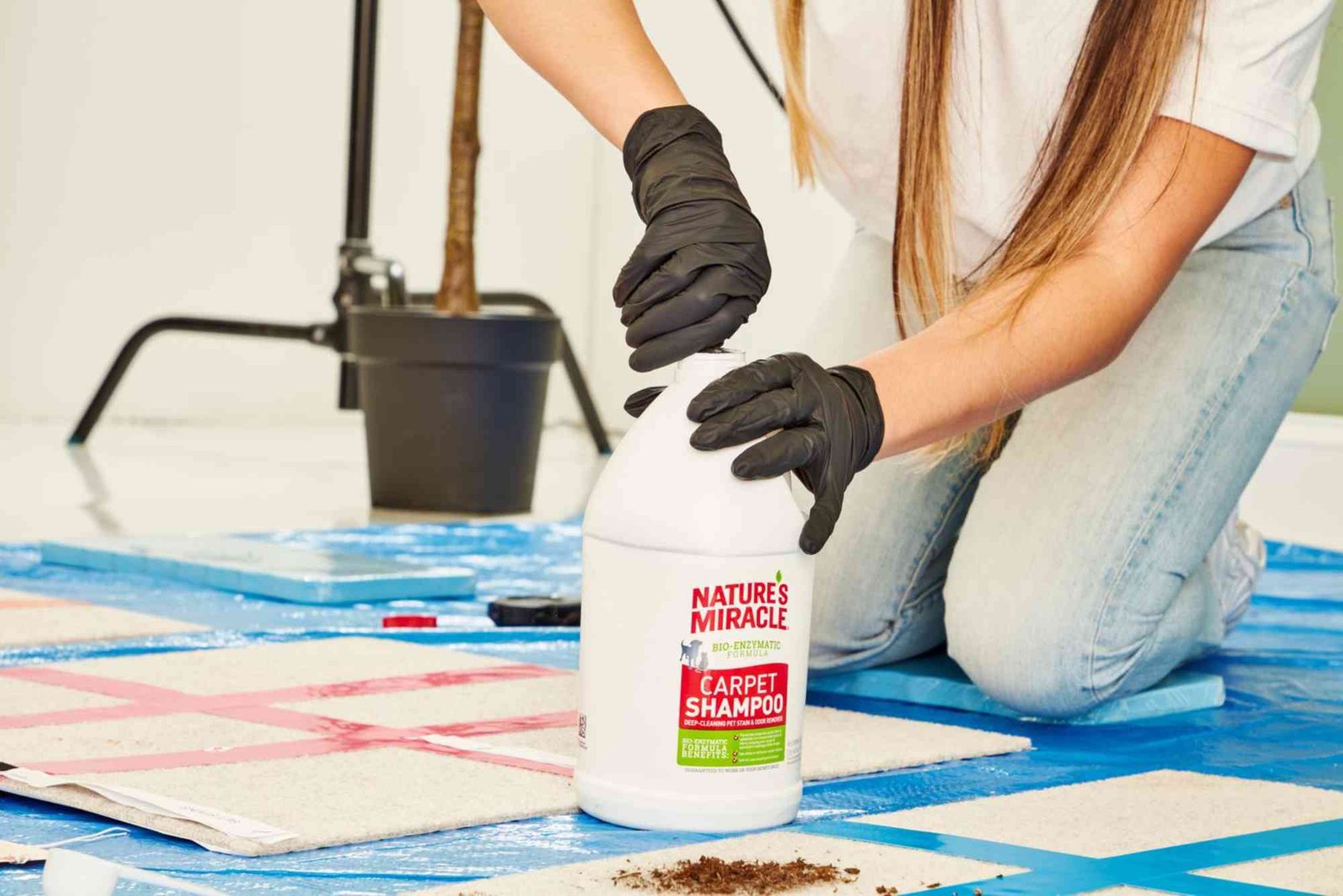
How to Clean Cat Urine from Carpets: Best Enzyme Cleaners
If you are searching for How to Clean Cat Urine from Carpets: Best Enzyme Cleaners, the key is treating the urine at its source. Cat urine can leave a stubborn smell even after the carpet looks clean. Regular carpet cleaners often mask the odor temporarily. Enzyme cleaners work differently by breaking down the organic compounds that cause the smell.
Fresh accidents are usually easier to handle. However, old stains can require deeper treatment. The right method depends on how much urine reached the carpet fibers, backing, and padding underneath.
Why Cat Urine Is So Difficult to Remove
Cat urine contains compounds that become particularly noticeable as they dry. Uric acid crystals can remain inside carpet fibers and padding. When moisture or humidity reaches those crystals, the familiar ammonia-like odor can return.
That is why simply spraying fragrance over the area rarely solves the problem. The odor may disappear briefly, but the source remains underneath.
Professional cleaning experience shows that penetration matters. If urine has reached the carpet pad, surface cleaning alone may not be enough.
How to Clean Cat Urine from Carpets: Best Enzyme Cleaners
The most effective approach is to use an enzyme-based cleaner designed specifically for pet urine. These products contain biological enzymes that help break down urine-related organic material.


First, identify the entire affected area. The visible stain may be smaller than the contaminated section underneath.
Next, absorb fresh urine before applying cleaner. Use several layers of paper towels or clean absorbent cloth. Press firmly rather than rubbing the carpet.
Once excess moisture is removed, apply enough enzyme cleaner to reach the contaminated fibers. For deeper accidents, the cleaner may need to penetrate into the carpet backing and pad.
Always follow the product’s directions. Some enzyme products need several hours of contact time to work properly.
Why Enzyme Cleaners Work Better
Enzyme cleaners target the compounds responsible for lingering pet odors. Traditional detergents primarily clean the surface.
An enzyme product can continue working after application. This makes it especially useful for urine that has soaked beyond the carpet’s top layer.
However, enzyme cleaners are not instant solutions. Giving the product enough time to work is important.
Step-by-Step Method for Removing Cat Urine
Start by locating the affected area. A strong odor can sometimes reveal contamination that is difficult to see.
For older stains, a UV flashlight can help identify additional spots. Mark each affected area before beginning treatment.
Absorb Fresh Urine
Blot fresh urine immediately with absorbent towels. Continue pressing until little moisture transfers to the towel.
Avoid aggressive scrubbing. Rubbing can push urine deeper into carpet fibers.
Apply an Enzyme Cleaner
Saturate the affected area according to the cleaner’s instructions. Surface spraying may not be sufficient when urine has reached the padding.
Allow the cleaner to remain wet for the recommended period. Do not immediately rinse it away unless the product instructions require rinsing.
Let the Area Dry Naturally
Allow the carpet to dry completely. Ventilation and air circulation can shorten drying time.
Avoid covering the area while it remains damp. Trapped moisture can create additional odor and drying problems.
Check the Odor Again
After the carpet dries, check the area carefully. If the smell remains, contamination may have reached the pad or subfloor.
In that situation, another treatment may be necessary. Severe contamination can sometimes require professional carpet cleaning or replacement of affected padding.
Choosing the Best Enzyme Cleaner for Cat Urine
Not every pet stain remover works equally well. Look for a product specifically formulated for cat urine.
A suitable cleaner should be designed to address urine odors rather than simply provide fragrance.
| Feature | Why It Matters |
|---|---|
| Enzyme-based formula | Helps break down urine-related organic compounds |
| Cat urine labeling | Indicates the product is designed for feline accidents |
| Deep-penetrating application | Helps reach urine below carpet fibers |
| Odor-neutralizing action | Addresses lingering smells |
| Carpet compatibility | Reduces the risk of fiber or backing damage |
| Clear usage directions | Helps ensure correct contact time |
Always test a small hidden section first. Carpet fibers and dyes can react differently to cleaning products.
Litter Box Fixes Can Prevent Repeat Accidents
Cleaning the carpet is only part of the solution. If your cat repeatedly urinates in the same location, investigate why.
Changes in litter box placement, cleanliness, or accessibility can affect behavior. Some cats also avoid boxes that are too dirty or difficult to access.
Stress and environmental changes may also contribute to inappropriate urination. Therefore, cleaning should be combined with practical Litter Box Fixes.
If accidents continue despite environmental changes, consult a veterinarian. Persistent urination outside the litter box can sometimes indicate an underlying problem.
How to Remove Old Cat Urine Odor
Old urine stains are more challenging because the contamination may have dried inside several carpet layers.
Start by identifying the full affected area. Then use an enzyme cleaner according to its directions.
For severe stains, professional inspection can determine whether the carpet pad or subfloor has been affected.
Understanding Uric Acid Crystal Breakdown
One reason old cat urine smells can return is the presence of dried residue. Moisture can reactivate odor from deposits left behind in carpet materials.
Effective Uric Acid Crystal Breakdown requires adequate treatment of the contaminated area. Simply cleaning the visible surface may leave residue underneath.
This explains why an apparently clean carpet can still smell after humid weather or another cleaning attempt.
Mistakes to Avoid When Cleaning Cat Urine
Several common cleaning methods can make the situation harder to manage.
Avoid using ammonia-based cleaners. Ammonia has an odor similar to components found in cat urine. It may also encourage a cat to investigate the area again.
Bleach should not be used casually on carpets. It can damage fibers, alter colors, and create dangerous chemical reactions when mixed with other cleaning products.
Do not combine different cleaning chemicals. Use one appropriate product at a time and follow its label.
Also avoid steam cleaning urine stains before properly treating them. Heat can make some odor problems more difficult to resolve.
When Professional Carpet Cleaning Makes Sense
Professional help is worthwhile when urine has penetrated deeply into the carpet.
A professional can inspect the carpet, pad, and potentially affected subfloor. Specialized extraction equipment can also remove contamination that household tools cannot reach.
Repeated accidents deserve particular attention. If several areas are affected, treating each spot individually may not solve the larger odor problem.
In severe cases, removing contaminated padding may be more effective than repeatedly cleaning it.
How to Prevent Future Carpet Accidents
Prevention starts with understanding why the accident happened.
Keep litter boxes clean and place them in quiet, accessible locations. Multiple boxes can also help in homes with several cats.
Clean accidents as soon as possible. Fresh urine is generally easier to remove than dried contamination.
After cleaning, monitor the area carefully. If your cat repeatedly returns to one location, additional behavioral or environmental changes may be needed.
You can also make the previously contaminated area less attractive by changing its function temporarily. For example, placing furniture over the cleaned area can discourage immediate revisiting.
Frequently Asked Questions
What is the best cleaner to get cat urine out of carpet?
An enzyme-based pet urine cleaner is generally the best choice for cat urine. It targets organic residues rather than simply masking the smell.
Choose a product specifically intended for cat urine and carpet use. Follow its application and contact-time instructions carefully.
Does vinegar remove cat urine from carpet?
Vinegar may help reduce some odors, but it does not provide the same targeted action as an enzyme cleaner.
For persistent cat urine, an enzyme-based product is usually a better option. Always avoid mixing vinegar with bleach or other chemical cleaners.
How do you get cat urine smell out of carpet permanently?
First, locate the complete contaminated area. Then use an enzyme cleaner deeply enough to reach the affected carpet materials.
Allow adequate contact time and let the carpet dry completely. If odor remains, the urine may have reached the padding or subfloor.
Can you get old cat urine smell out of carpet?
Yes, old odors can often be reduced significantly. However, older contamination can require deeper treatment.
If urine has penetrated the padding or subfloor, surface cleaning may not be sufficient. Professional treatment may then provide better results.
Will baking soda get rid of cat urine smell?
Baking soda can absorb some surface odors, but it does not replace an enzyme treatment.
For established cat urine contamination, focus on removing the source first. Odor-absorbing products can be considered afterward.
Learning How to Clean Cat Urine from Carpets: Best Enzyme Cleaners starts with understanding that the visible stain is not always the complete problem. Cat urine can penetrate carpet fibers, padding, and even the subfloor.
Enzyme cleaners are useful because they target the organic compounds behind persistent odors. Apply them correctly, allow sufficient contact time, and give the carpet enough time to dry.
If repeated accidents continue, address the litter box setup and consider professional or veterinary advice. Taking action early can protect your carpet and keep your home smelling fresh.
Start by identifying every affected area today. Choose a carpet-safe enzyme cleaner, follow its instructions carefully, and treat the source rather than simply covering the odor.
Related Reading: Best Wet Food for Senior Cats with Kidney Disease and Sensitive Stomachs
Related Reading: GAC's Ambitious Green Clean Project: Targeting Carbon Neutrality
Related Reading: Gelish Manicure: A Long-Lasting Choice for Beautiful Nails


