Introduction
Indoor cats enjoy comfortable homes, regular meals, and safe sleeping spaces. However, they can become bored without enough physical activity and mental stimulation. The best interactive cat toys for bored indoor cats (lasers, feathers, mice) encourage natural hunting instincts while making everyday playtime more enjoyable. These toys help cats chase, pounce, stalk, and explore their surroundings.
Laser pointers, feather wands, and toy mice offer different types of enrichment. Each option can support exercise and reduce boredom when used appropriately. Nevertheless, choosing suitable toys depends on your cat’s personality, age, activity level, and preferences.
Understanding how these toys work can help you create a more engaging indoor environment. With regular play sessions and a little variety, you can make your cat’s daily routine more rewarding.
Why Indoor Cats Need Interactive Toys
Indoor cats often have fewer opportunities to hunt, climb, and explore than outdoor cats. Although indoor living protects them from many environmental dangers, it can also limit their natural activities.
Interactive toys help fill this gap by encouraging movement and problem-solving. Chasing a feather wand allows a cat to practice stalking and pouncing. Searching for a hidden toy mouse provides mental stimulation and encourages exploration.
Regular play can also help prevent inactivity-related weight gain. However, toys alone cannot guarantee a healthy weight. Appropriate portions, balanced nutrition, and routine veterinary care remain important.


Interactive play may also strengthen the relationship between cats and their owners. When you participate in games your cat enjoys, you provide attention alongside physical enrichment.
Best Interactive Cat Toys for Bored Indoor Cats
Different toys appeal to different feline personalities. Some cats love fast-moving objects, while others prefer quiet stalking games. Offering several types helps you discover which activities keep your pet interested.
Laser Toys for Active Cats
Laser pointers attract cats by creating a small, moving target. Cats instinctively follow the light, often running, turning, and jumping as they try to catch it.
This activity can encourage movement, especially for energetic indoor cats. It can also provide variety when ordinary toys no longer attract much attention.
However, laser play requires careful handling. Never shine the beam directly into your cat’s eyes. Avoid directing it toward reflective surfaces that could redirect the light.
Most importantly, cats cannot physically catch a laser dot. Ending every session without a satisfying result may frustrate some animals. To prevent this, guide the light toward a physical toy or treat that your cat can catch.
Keep sessions short and monitor your cat’s response. If your pet becomes distressed, fixates on lights, or repeatedly searches for the dot afterward, stop using the laser and choose another activity.
Feather Wands for Natural Hunting Practice
Feather wands are excellent options for cats that enjoy interactive games with their owners. Their movement resembles birds, making them appealing to cats that like stalking, chasing, and leaping.
You can move the feathers across the floor, hide them behind furniture, or lift them briefly into the air. Changing direction and speed makes the activity more realistic.
Allow your cat to catch the feathers regularly. This provides a satisfying conclusion to the hunting sequence and keeps the game rewarding.
Feather wands also encourage bonding because you control the movement. You can adjust the activity according to your cat’s energy level and physical ability.
Choose a sturdy wand with securely attached feathers. Always supervise play, since loose feathers, strings, and small attachments may become choking hazards if swallowed. Store the toy safely after each session.
Toy Mice for Independent Entertainment
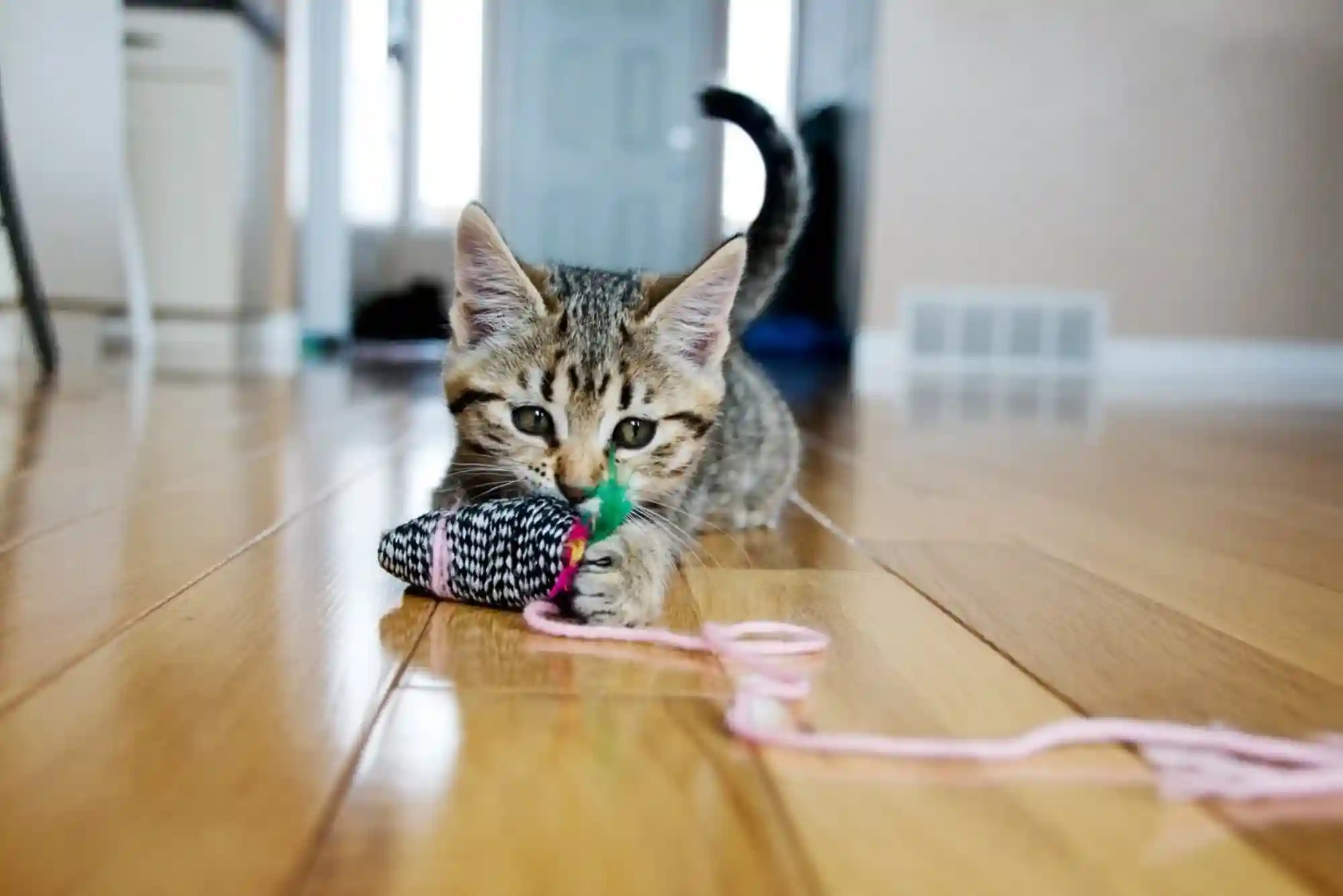
Toy mice provide an easy way to encourage natural hunting behavior. Cats can carry them, bat them across the floor, pounce on them, and hide them in favorite places.
Some toy mice contain catnip, which may encourage additional interest in suitable adult cats. However, not every cat responds to catnip, and kittens may show little reaction.
Other mice feature crinkly materials or small bells. These textures and sounds can attract curious cats, although individual preferences vary.
Toy mice are particularly useful for short play sessions throughout the day. You can toss one across a room or hide it behind a safe object to encourage searching.
Select toys without detachable eyes, loose parts, or easily swallowed decorations. Inspect them regularly and replace damaged toys. If your cat chews and swallows fabric, supervise play closely or choose a safer alternative.
How to Choose the Right Interactive Cat Toy
The most suitable toy matches your cat’s natural interests and physical abilities. Observe which movements capture your pet’s attention before buying several new products.
Energetic cats may enjoy feather wands and supervised laser games. Cats that prefer stalking may respond better to toy mice or slow-moving objects. Older cats often benefit from gentle games that avoid high jumps and sudden movements.
Your cat’s individual preferences matter more than a toy’s popularity. Some cats ignore expensive electronic toys but happily chase a simple fabric mouse.
Safety should also influence your decision. Avoid toys with exposed wires, sharp edges, loose strings, or small detachable components. Check battery compartments on electronic products and keep inaccessible parts securely closed.
Interactive toys should complement, rather than replace, social interaction. Spend time playing with your cat and adjust each session to its comfort level.
How to Keep Your Cat Interested in Playtime
Even appealing toys can become less exciting when they remain available all day. Rotating toys helps introduce novelty without constantly purchasing new products.
Keep a small selection accessible and store the remaining toys elsewhere. Switch the available options every few days, depending on your cat’s interest. This simple approach can make familiar toys feel interesting again.
You can also change how you use each toy. A feather wand might imitate a bird landing, while a toy mouse can disappear behind a cushion before reappearing.
Avoid overwhelming your cat with constant movement. Realistic pauses give your pet opportunities to observe, stalk, and prepare to pounce.
Consistency matters as well. Schedule play sessions around times when your cat naturally becomes active. Many cats enjoy playing during early morning or evening periods, although individual routines differ.
After an active session, offer a small meal or part of your cat’s regular food allowance when appropriate. This can create a satisfying transition from hunting-style play to resting.
Common Mistakes to Avoid With Interactive Cat Toys
One common mistake is allowing a laser pointer to become the entire play experience. Cats need opportunities to catch physical objects, so finish laser sessions with a tangible toy or suitable treat.
Another mistake is choosing toys without considering safety. Loose strings, damaged feathers, and small components can cause serious problems if swallowed. Inspect toys before use and supervise activities involving potential hazards.
Some owners also expect every cat to enjoy the same game. A shy cat may prefer slow movements, while a confident cat might enjoy more energetic chasing. Adjust the activity instead of forcing participation.
Finally, avoid making play sessions excessively intense. Kittens, senior cats, and pets with mobility limitations may need shorter, gentler activities. Stop when your cat appears tired, uncomfortable, or uninterested.
Frequently Asked Questions
What are the best interactive toys for indoor cats?
Feather wands, toy mice, puzzle feeders, and supervised laser toys are useful options. The right choice depends on your cat’s interests, activity level, and physical abilities. Combining several types of enrichment often provides more variety than relying on one toy.
Are laser toys safe for cats?
Laser toys can be used safely when you avoid the eyes and use controlled movements. However, cats cannot catch the light itself. Finish the game by directing your cat toward a physical toy or treat, and discontinue use if the activity causes frustration or obsessive behavior.
How long should I play with my indoor cat each day?
Several short sessions spread throughout the day work well for many cats. Start with approximately five to ten minutes per session and adjust according to your cat’s interest and stamina. Kittens and energetic adults may want more opportunities, while senior cats may prefer gentler games.
Do indoor cats get bored without toys?
Indoor cats can experience boredom when their environment lacks stimulation. However, toys are only one part of enrichment. Climbing spaces, scratching posts, window views, hiding places, food puzzles, and positive human interaction can also support their wellbeing.
Are feather toys or toy mice better for cats?
Neither option is universally better. Feather toys encourage interactive chasing with an owner, while toy mice support pouncing and carrying games. Offering both allows you to discover your cat’s preferences and provide different types of enrichment.
Conclusion
The best interactive cat toys for bored indoor cats (lasers, feathers, mice) can make daily life more engaging by encouraging exercise, curiosity, and natural hunting behaviors. Laser toys offer fast-moving targets, feather wands encourage interactive chasing, and toy mice provide opportunities for stalking and pouncing.