Introduction
If your cat has turned the sofa, dining chairs, or curtains into a personal scratching station, you are not alone. Scratching is a normal and important feline behaviour, but that does not mean your furniture has to suffer. The key to learning how to stop cats from scratching furniture is not to eliminate scratching altogether. Instead, you need to give your cat a more appealing place to scratch and make that option easy to use.
A properly selected and positioned scratching post can make a remarkable difference. However, simply buying a post and placing it in a corner is rarely enough. Cats have individual preferences for height, texture, stability, and location. Understanding those preferences allows you to create a scratching setup that works with your cat’s natural instincts rather than against them.
Why Do Cats Scratch Furniture?
Before learning how to stop cats from scratching furniture, it helps to understand why they do it in the first place. Scratching serves several purposes beyond simply sharpening claws.
Scratching Is Natural Cat Behaviour
Cats scratch to maintain their claws, stretch their shoulders and back, and exercise their muscles. Scratching also provides mental stimulation and can help cats release excitement or frustration.
When a cat scratches a sofa, it may not be deliberately misbehaving. The furniture may simply provide exactly what the cat wants: a tall, stable surface with an attractive texture.
Cats Use Scratching to Mark Territory
Scratching can also be a form of communication. Cats have scent glands around their paws, so scratching leaves both visible marks and scent signals.


This is one reason cats often scratch in prominent areas such as sofa corners, doorways, or furniture near sleeping spaces. These locations can be particularly important to your cat.
Scratching Can Become a Habit
Once a cat discovers that a particular piece of furniture feels satisfying to scratch, the behaviour can become routine. If you want to know how to stop cats from scratching furniture, replacing that habit with an equally rewarding alternative is usually more effective than punishment.
Choose the Right Scratching Post
The scratching post itself is one of the most important parts of the setup. A post that is too short, unstable, or covered in an unappealing material may be ignored.
Choose a Tall, Stable Post
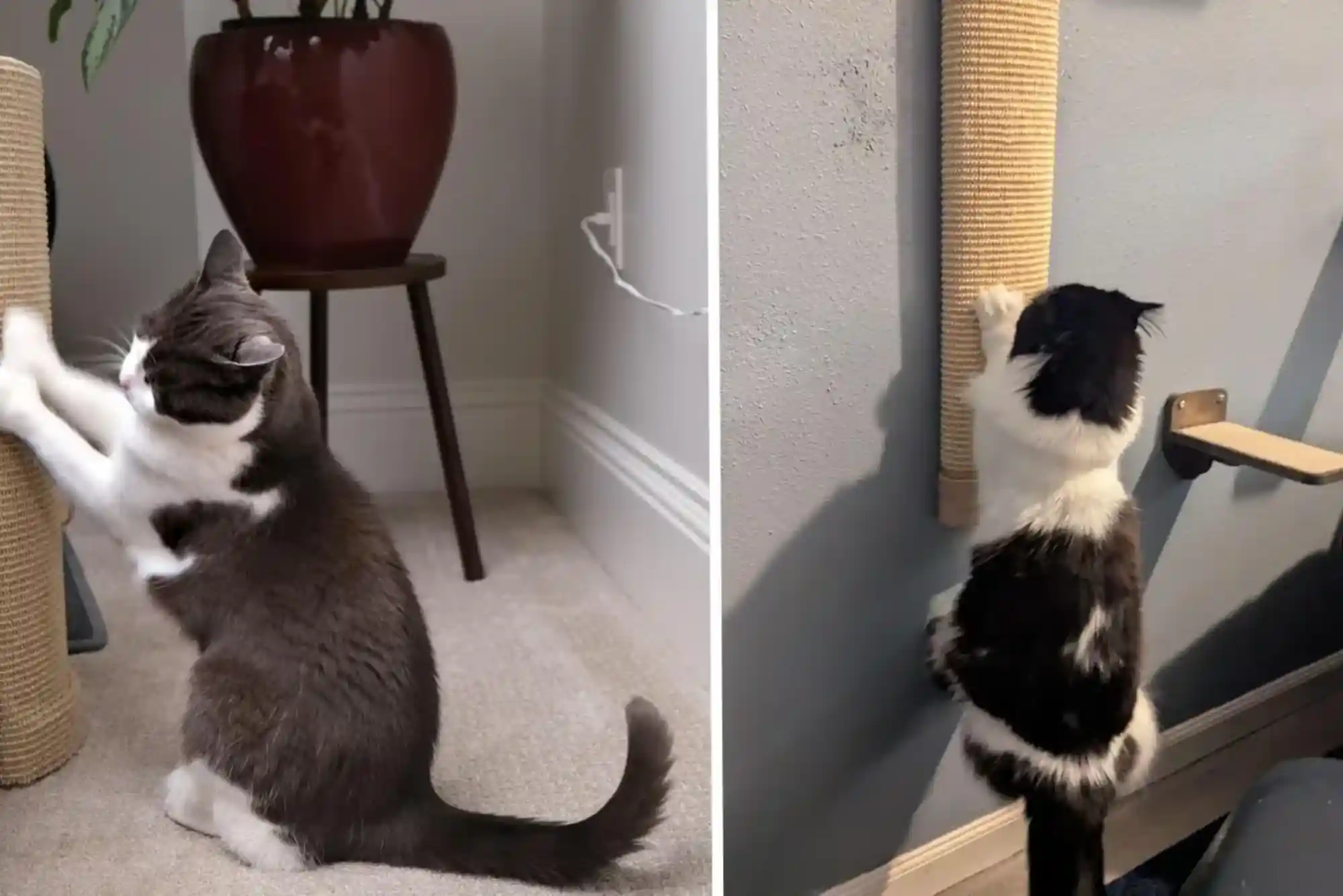
Many cats prefer to stretch their entire body while scratching. For these cats, a vertical post should be tall enough for them to extend fully while standing on their hind legs.
Stability is equally important. If the post wobbles or tips over, your cat may quickly decide it is unsafe or unpleasant. A heavy base or securely mounted scratching structure is usually a better choice than a lightweight model.
Pay Attention to Texture
Cats can have strong preferences about scratching surfaces. Sisal is popular because it provides resistance and allows claws to grip. Some cats prefer cardboard, while others enjoy carpet or natural wood.
If your cat ignores one type of scratching post, do not assume scratching posts do not work. Try another texture instead.
Consider Horizontal Scratching Surfaces
Not every cat wants to scratch vertically. Some prefer horizontal cardboard scratchers or low scratching pads.
If your cat repeatedly scratches carpets or rugs, a horizontal scratcher may be more appropriate than a tall post. Matching the scratching surface to your cat’s existing behaviour can make training considerably easier.
Where Should You Put the Scratching Post?
One of the biggest mistakes owners make is placing the scratching post somewhere inconvenient simply because it looks better there.
Place It Near Existing Furniture Targets
If your cat scratches the corner of the sofa, place the scratching post directly beside that area initially. This makes the alternative immediately available when the cat feels the urge to scratch.
Once your cat regularly uses the post, you can gradually move it a small distance at a time if necessary.
Put Scratching Posts Near Sleeping Areas
Cats often stretch and scratch after waking. Placing a scratching post near a favourite sleeping location can take advantage of this natural routine.
A post near a bed, sofa, or other regular resting place may therefore receive more attention than one hidden in a spare room.
Use Multiple Scratching Locations
If your home has several rooms where your cat spends time, one scratching post may not be enough. Multiple options allow your cat to scratch without needing to travel across the house.
This is especially useful in larger homes or multi-level properties.
How to Make a Scratching Post More Attractive
Buying the right post is only the first step. You also need to make it interesting enough for your cat to choose it over furniture.
Use Catnip Carefully
Catnip can encourage some cats to investigate and interact with a new scratching post. You can rub a small amount onto the scratching surface or use a catnip-containing toy nearby.
However, not every cat responds to catnip. If your cat shows no interest, do not keep adding more. Other forms of attraction may work better.
Reward Appropriate Scratching
Positive reinforcement is one of the most useful techniques for changing scratching habits. Whenever your cat voluntarily uses the scratching post, offer praise, affection, play, or a small treat if appropriate.
The reward should happen soon after the desired behaviour so your cat can make the connection.
Make the Furniture Less Appealing
While encouraging the scratching post, temporarily make targeted furniture less satisfying. Furniture covers, protective materials, or rearranging access can reduce opportunities to practise the unwanted behaviour.
Avoid frightening your cat or using harsh punishment. The goal is to make the scratching post the better option, not to make your cat afraid of scratching.
How to Stop Cats from Scratching Furniture Through Training
Successful training is generally about redirection and consistency.
Redirect Instead of Punish
If you catch your cat scratching the sofa, calmly interrupt the behaviour and guide them towards the scratching post. When they use it, reward them.
Avoid yelling, hitting, spraying water, or physically forcing the cat’s paws onto the post. These methods can create fear without teaching the cat what behaviour you actually want.
Use Play to Encourage Scratching
Interactive play can help introduce a new scratching post. Move a toy around the post so your cat naturally touches or climbs onto it. When scratching begins, allow the behaviour and reward it.
You can also place a favourite toy beside the post so the area becomes associated with positive experiences.
Be Consistent
Everyone in the household should respond to unwanted scratching in the same way. If one person redirects the cat while another encourages interaction with the furniture, training becomes confusing.
Consistency over several weeks is often more effective than attempting an intensive one-day solution.
Common Scratching Post Setup Mistakes
Even a high-quality scratching post can fail if the setup does not suit your cat.
Putting the Post Too Far Away
A scratching post hidden behind furniture or placed in an unused room may be ignored. Cats generally prefer convenient scratching locations.
If the cat is scratching a particular sofa, start by placing the alternative immediately nearby.
Choosing a Post That Moves
A wobbly scratching post can discourage use. Your cat needs to feel secure while pulling against the surface with their body weight.
If necessary, choose a heavier model or secure the post to a stable surface.
Buying Only One Type
Cats have individual preferences. If your cat ignores a vertical sisal post, consider experimenting with a horizontal cardboard scratcher or another texture.
You may need to provide different options before discovering your cat’s favourite.
Moving the Post Too Quickly
Once your cat starts using a scratching post, resist the temptation to move it immediately to a more attractive location. Move it gradually, especially if it was originally positioned beside a favourite piece of furniture.
How Long Does It Take to Stop Furniture Scratching?
There is no universal timeline. Some cats begin using a new scratching post almost immediately, while others need several weeks of consistent encouragement.
The speed of progress depends on your cat’s age, personality, previous habits, environment, and the attractiveness of the new scratching setup.
The most important thing is to measure progress realistically. Your goal is not necessarily to prevent every scratch on every piece of furniture. Instead, you want the majority of scratching to happen on appropriate surfaces.
When Furniture Scratching May Signal a Problem
Scratching is normal, but a sudden dramatic increase in scratching can sometimes accompany environmental changes or stress.
Moving house, introducing another pet, changing routines, or other disruptions may affect a cat’s behaviour. If scratching becomes excessive alongside hiding, aggression, changes in appetite, toileting problems, or other unusual behaviours, speak with a veterinarian or qualified feline behaviour professional.
Regular nail care can also help reduce furniture damage, although trimming claws does not replace the need for appropriate scratching outlets.
Create a Scratching Setup Your Cat Wants to Use
Learning how to stop cats from scratching furniture starts with accepting that scratching itself is a healthy feline behaviour. The solution is to redirect that behaviour toward surfaces that are safe and appropriate.
Choose a sturdy scratching post, match its texture and orientation to your cat’s preferences, and place it close to existing scratching targets. Reward appropriate use, protect furniture temporarily, and give your cat time to develop the new habit.
Most importantly, do not expect one scratching post to solve every problem immediately. A thoughtful setup combined with patient, positive training can protect your furniture while allowing your cat to express a completely natural behaviour.
FAQs
How do I stop my cat from scratching my furniture?
The most effective approach is to provide an appealing scratching post near the furniture your cat targets, then reward the cat for using it. Choose a stable post with a texture and orientation your cat enjoys. Temporarily protecting the furniture can also help while the new habit develops.
How do I get my cat to use a scratching post instead of the couch?
Place the scratching post beside the couch where your cat already scratches. Encourage interaction with toys or catnip if your cat responds to them, and reward the cat whenever they use the post. Once the behaviour is established, you can gradually move the post.
Why won’t my cat use the scratching post?
Your cat may dislike its texture, height, orientation, location, or stability. Try a different style rather than assuming your cat will eventually accept it. Observing how your cat currently scratches furniture can provide useful clues about what type of scratcher they prefer.
Is it OK to spray my cat with water when it scratches furniture?
Punishment is generally not recommended for changing scratching behaviour. Spraying water may make your cat fearful or cause them to avoid scratching only when you are present. Redirecting the behaviour and rewarding appropriate scratching is a better long-term strategy.
Should I put catnip on a scratching post?
Catnip can attract some cats to a scratching post, but not all cats respond to it. If your cat does not react to catnip, focus instead on the post’s location, stability, texture, and positive reinforcement.
How many scratching posts should a cat have?
There is no single number suitable for every household. Providing several scratching opportunities in the areas your cat regularly uses is often more practical than relying on one post. Multiple options can also help households with more than one cat.
Related Reading: How to Prevent and Treat Hairballs in Indoor Cats