Introduction
Hairballs are a common problem for cats, especially those that spend most or all of their time indoors. Because cats naturally groom themselves by licking their coats, they inevitably swallow some loose hair. Most of that hair passes harmlessly through the digestive system, but some can collect in the stomach and eventually be vomited as a hairball. Knowing how to prevent and treat hairballs in indoor cats can help keep your pet comfortable while reducing unnecessary vomiting and digestive problems.
Occasional hairballs may be normal, but frequent vomiting, repeated gagging, constipation, loss of appetite, or unusual behaviour should not simply be blamed on hairballs. These signs can indicate an underlying health problem that needs veterinary attention. With regular grooming, appropriate nutrition, good hydration, and sensible monitoring, many indoor cats can experience fewer troublesome hairballs.
Why Do Indoor Cats Get Hairballs?
Hairballs develop because of a cat’s grooming behaviour. A cat’s tongue has tiny, backward-facing structures that act almost like a comb, collecting loose fur as the animal cleans itself. The swallowed hair normally moves through the digestive tract and leaves the body in the stool.
Sometimes, however, enough hair accumulates in the stomach that the cat attempts to remove it by vomiting. The resulting mass is commonly called a hairball, although it is often shaped more like a narrow cylinder than a round ball.
Indoor cats can be particularly prone to hairballs because they may groom frequently, spend more time resting and grooming themselves, and have fewer environmental activities competing for their attention. Long-haired breeds are also more likely to swallow substantial quantities of fur.
How to Prevent Hairballs in Indoor Cats
The best approach to prevent hairballs in indoor cats is to reduce the amount of loose hair your cat swallows in the first place. Prevention does not mean stopping normal grooming. Instead, it involves managing shedding and supporting healthy digestion.


Brush Your Cat Regularly
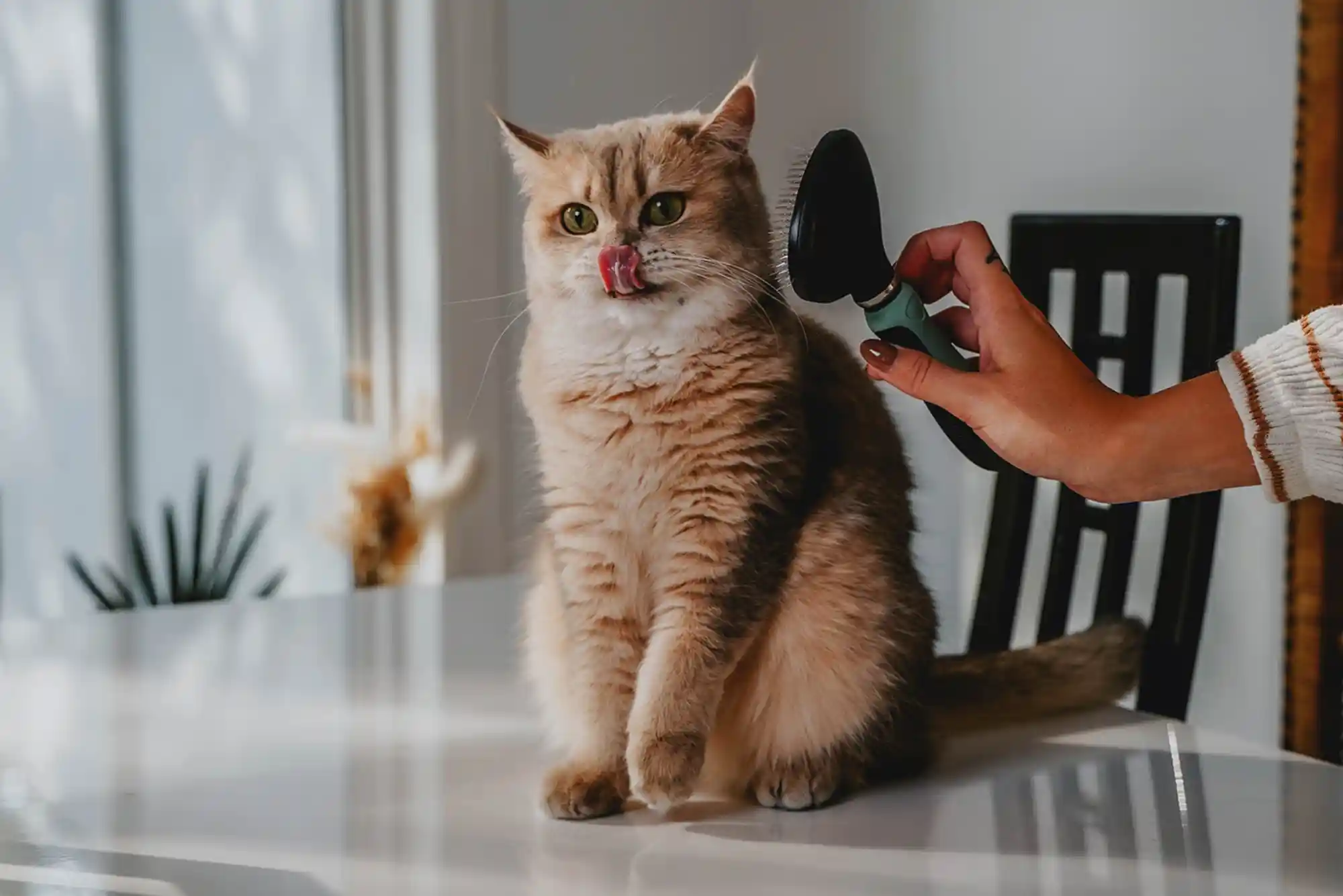
Regular brushing is one of the simplest and most effective ways to reduce swallowed hair. When you remove loose fur with a brush, your cat has less hair available to ingest during self-grooming.
Short-haired cats may benefit from brushing several times a week, while long-haired cats often need daily grooming. During heavy shedding periods, more frequent brushing can be useful.
Choose a grooming tool appropriate for your cat’s coat. A soft brush may work well for short coats, while long or dense coats may require a comb designed to reach deeper layers without pulling painfully on the skin.
Make grooming a calm, positive routine. Start with short sessions and reward your cat with praise or a small treat if they tolerate brushing well.
Pay Extra Attention During Shedding
Seasonal shedding can increase the amount of fur your cat swallows. Although indoor lighting and temperature can influence shedding patterns, many cats still lose significant amounts of coat at particular times of the year.
During these periods, increase brushing rather than waiting until you notice excessive loose hair around the home. Consistent grooming is easier for both you and your cat than trying to remove a large amount of accumulated fur at once.
Feed a Complete, Balanced Diet
Nutrition plays an important role in maintaining healthy skin and fur. A nutritionally complete cat food provides the nutrients required for normal coat growth and maintenance.
Some commercial cat foods are specifically formulated with ingredients and fibre intended to support healthy digestion and help swallowed hair move through the gastrointestinal tract. These diets may be useful for cats that regularly experience hairballs, but they are not a substitute for veterinary assessment when vomiting is frequent or severe.
Avoid making major dietary changes suddenly. If you want to switch foods, introduce the new diet gradually to reduce the chance of digestive upset.
Encourage Adequate Hydration
Good hydration supports normal digestive function. Cats can be naturally reluctant to drink large quantities of water, so providing multiple clean water sources may encourage them to drink more.
Some cats prefer moving water, making a cat water fountain worth considering. Wet food can also contribute significantly to daily water intake.
Keep water bowls clean and place them somewhere your cat feels comfortable using them. If your cat’s water consumption changes noticeably, particularly if they suddenly drink much more or much less, discuss the change with a veterinarian.
Keep Your Cat Active
Exercise and environmental enrichment can support overall wellbeing. Indoor cats benefit from interactive play, climbing opportunities, scratching areas, puzzle feeders, and toys that encourage natural behaviours.
Regular activity does not directly eliminate hairballs, but maintaining healthy routines can support normal digestion and reduce boredom-related excessive grooming in some cats.
If you notice that your cat is repeatedly licking or chewing a particular area of the body, investigate the cause rather than assuming it is simply normal grooming. Skin irritation, parasites, allergies, pain, and stress can all contribute to excessive grooming.
How to Treat Hairballs in Indoor Cats
When learning how to prevent and treat hairballs in indoor cats, it is important to distinguish an occasional uncomplicated hairball from repeated vomiting.
If your cat produces an occasional hairball and otherwise eats, drinks, plays, and behaves normally, you may simply need to monitor them and strengthen your prevention routine.
Continue Regular Grooming
After a hairball episode, continue brushing your cat rather than stopping grooming. Removing loose fur helps reduce the amount your cat swallows in future grooming sessions.
For cats with long or easily tangled coats, pay attention to areas such as the chest, belly, legs, and behind the ears. Mats can trap loose hair close to the skin and may become uncomfortable.
Never cut severe mats with household scissors close to the skin. Cat skin can be surprisingly easy to injure. Professional grooming or veterinary assistance may be safer for extensive matting.
Ask Your Veterinarian About Hairball Products
There are commercial hairball remedies designed to help swallowed hair pass through the digestive tract. Some contain lubricating ingredients, while others rely on dietary fibre.
Do not assume that every hairball remedy is appropriate for every cat. Follow the product directions and ask your veterinarian before regularly giving supplements or laxative-type products, particularly if your cat has an existing medical condition or takes medication.
A veterinarian can also help determine whether a specialised hairball diet is appropriate.
Do Not Force Your Cat to Vomit
Trying to make a cat vomit at home can be dangerous. Household substances and inappropriate medications may cause poisoning, aspiration, or damage to the digestive tract.
If you suspect that your cat has swallowed something other than ordinary fur, such as string, ribbon, plastic, or a toxic substance, contact a veterinarian promptly rather than attempting a home treatment.
When Are Hairballs a Sign of a Problem?
Occasional hairballs can occur in healthy cats, but frequent vomiting deserves attention. A cat that repeatedly gags, vomits, coughs, refuses food, becomes lethargic, or has difficulty passing stool may have a problem that is unrelated to an ordinary hairball.
A gastrointestinal blockage is one important concern. A mass of hair can occasionally contribute to an obstruction, but foreign objects and other medical conditions can produce similar symptoms.
Cats are also very good at hiding illness. That means changes in appetite, activity, litter-box habits, grooming behaviour, or body weight should be taken seriously.
Seek veterinary advice if your cat has repeated vomiting, persistent retching without producing a hairball, abdominal discomfort, significant constipation, weakness, dehydration, or a noticeable loss of appetite.
Hairballs vs Vomiting From Another Cause
One of the most important parts of how to prevent and treat hairballs in indoor cats is understanding that not every episode of vomiting is caused by fur.
A true hairball is usually a compact mass of hair mixed with stomach contents. In contrast, repeated vomiting of food, liquid, foam, or bile without visible hair may have another cause.
Coughing can also sometimes be mistaken for trying to bring up a hairball. A cat may crouch, extend its neck, and make forceful respiratory movements during coughing, which can look similar to vomiting.
Possible causes of repeated vomiting or gagging include gastrointestinal disease, dietary intolerance, parasites, inflammatory conditions, kidney disease, foreign-body ingestion, and other health problems.
If you are unsure what you are seeing, recording a short video of an episode can help your veterinarian distinguish coughing from vomiting or retching.
Can Diet and Fibre Help With Hairballs?
Dietary fibre can help support normal movement of material through the digestive system, which is why some cat foods marketed for hairball management contain specific fibre sources.
However, more fibre is not automatically better. Cats have specific nutritional requirements, and excessive supplementation may cause digestive problems or interfere with an appropriately balanced diet.
For a cat that experiences frequent hairballs, talk to a veterinarian about whether a high-fibre or hairball-focused diet is appropriate. The ideal solution depends on the cat’s age, coat type, health status, diet, and overall digestive function.
How Grooming Reduces Hairballs
Grooming is central to preventing hairballs in indoor cats because it addresses the problem before swallowed hair reaches the stomach.
Begin slowly if your cat dislikes brushing. Let them sniff the brush before using it. Brush gently in the direction of hair growth and keep early sessions short. Avoid pulling through knots because painful grooming can make a cat fearful of future sessions.
Long-haired cats generally require more grooming than short-haired cats. If your cat develops frequent mats or cannot tolerate home grooming, professional grooming may be helpful.
Regular grooming also gives you an opportunity to notice changes in your cat’s skin, coat, or body condition. New bald patches, redness, scabs, parasites, or excessive dandruff should be discussed with a veterinarian.
Common Mistakes Cat Owners Make
One common mistake is waiting until a cat vomits a hairball before beginning a grooming routine. Prevention works better when brushing becomes a regular habit.
Another mistake is assuming that frequent vomiting is normal simply because a cat has long hair. Long-haired cats may be more susceptible to hairballs, but repeated vomiting should still be investigated.
Using human laxatives or other household remedies is another potential problem. Cats metabolise many substances differently from humans, and seemingly harmless products can be unsafe.
Finally, avoid abruptly changing your cat’s food whenever a hairball occurs. A sudden diet change can cause additional gastrointestinal upset. If dietary management is needed, make the transition gradually with veterinary guidance.
A Simple Long-Term Hairball Prevention Routine
A practical approach to prevent hairballs in indoor cats is to combine several small habits rather than relying on one product.
Brush your cat regularly according to their coat type, increase grooming during heavy shedding, provide fresh drinking water, feed a nutritionally complete diet, encourage daily activity, and monitor litter-box habits.
Keep an eye on how often your cat vomits and what the material looks like. Occasional hairballs in an otherwise healthy cat may not be alarming, but an increase in frequency or a change in your cat’s behaviour should prompt a veterinary conversation.
The goal is not necessarily to eliminate every hairball. Instead, good management aims to minimise excessive swallowed fur while ensuring that any abnormal symptoms are identified early.
Build Better Hairball Habits
Understanding how to prevent and treat hairballs in indoor cats is mostly about consistent everyday care. Regular brushing reduces loose fur before your cat can swallow it, while good nutrition, hydration, exercise, and appropriate veterinary care support healthy digestion.
An occasional hairball may not be cause for concern, but repeated vomiting should never be dismissed automatically. Your cat’s normal behaviour is the best baseline for recognising changes.
Start with a simple grooming routine today and monitor your cat’s coat, appetite, digestion, and behaviour. If hairballs are becoming frequent or your cat shows any worrying symptoms, speak with your veterinarian for personalised advice and an appropriate treatment plan.
FAQs
How often is it normal for a cat to cough up a hairball?
Occasional hairballs can occur in healthy cats, but there is no universal number that is considered normal for every cat. Frequent or increasing hairball episodes should be discussed with a veterinarian, especially when accompanied by vomiting, appetite changes, constipation, or lethargy.
How do I stop my indoor cat from getting hairballs?
Regular brushing is one of the most effective ways to reduce swallowed fur. A balanced diet, adequate hydration, exercise, and appropriate grooming can also support normal digestion and reduce hairball problems.
What can I give my cat to help with hairballs?
Veterinary-approved hairball diets and certain hairball remedies may help some cats. Ask your veterinarian before introducing supplements or laxative-type products, particularly if your cat has recurring symptoms.
Is it normal for cats to throw up hairballs?
An occasional hairball can be normal because cats naturally swallow fur while grooming. However, repeated vomiting should not automatically be attributed to hairballs and may require veterinary investigation.
Does wet food help with hairballs?
Wet food can increase a cat’s overall water intake, which supports normal hydration and digestive function. It does not directly eliminate hairballs, but adequate hydration can be part of a broader hairball-management routine.
When should I take my cat to the vet for a hairball?
Contact a veterinarian if your cat repeatedly vomits or retches without producing a hairball, stops eating, becomes unusually tired, appears painful, has persistent constipation, loses weight, or shows other concerning changes.
Related Reading: How to Stop Cats from Scratching Furniture: Scratching Post Setup
Related Reading: Best Wet Food for Senior Cats with Kidney Disease and Sensitive Stomachs — full guide